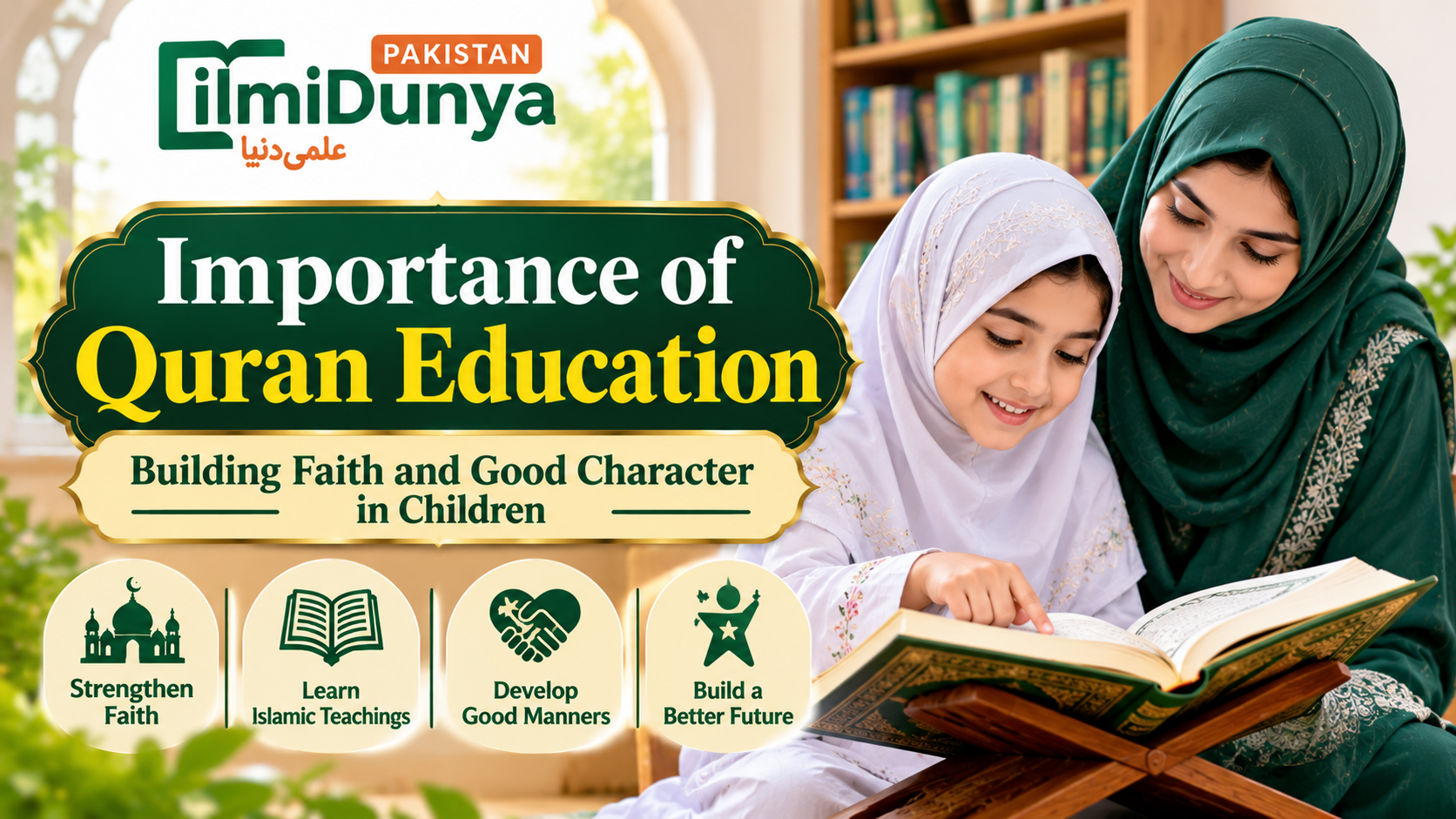
Quran education plays an important role in a Muslim child's life. The Holy Quran is not just a religious book; it is a complete source of guidance that teaches children about faith, good character, kindness, honesty, patience, and responsibility.
Teaching children the Quran from an early age helps them develop a strong connection with Allah and understand the basic principles of Islam. It also provides them with moral guidance that can influence their decisions and behaviour throughout life.
Parents have an important responsibility to introduce their children to Quran learning and create a positive environment where they can understand and practise Islamic teachings.
Why Is Quran Education Important for Children?
Childhood is an important stage for developing habits, values, and beliefs. Introducing Quran education during these years helps children become familiar with their religion and learn how to apply Islamic teachings in everyday life.
Here are some important benefits of Quran education for children.
1. Builds a Strong Connection with Allah
The Quran teaches children about Allah, His mercy, His creation, and the purpose of human life.
When children regularly read and learn the Quran, they gradually develop an understanding of their relationship with their Creator. They also learn the importance of prayer, gratitude, trust in Allah, and remembering Him.
This connection can provide spiritual guidance throughout their lives.
2. Teaches Good Manners and Character
One of the greatest benefits of Quran education is that it teaches children how to become better human beings.
Through Quranic teachings, children learn the importance of:
- •Respecting parents and elders.
- •Speaking truthfully.
- •Helping people in need.
- •Being kind to others.
- •Avoiding lying and dishonesty.
- •Showing patience and forgiveness.
- •Treating others with fairness.
These values help children develop positive behaviour at home, school, and in society.
3. Helps Children Understand Islamic Teachings
Quran education introduces children to the basic teachings of Islam. It helps them understand why Muslims pray, fast during Ramadan, give charity, and follow the guidance of Prophet Muhammad ﷺ.
Children who learn the Quran with proper explanations can develop a better understanding of their religion rather than simply memorising words without knowing their meaning.
Parents should encourage children to ask questions and learn age-appropriate explanations of Quranic verses.
4. Improves Arabic Reading and Pronunciation
Learning to read the Quran helps children become familiar with Arabic letters, pronunciation, and reading rules.
With proper guidance, children can gradually learn:
- •Arabic alphabet and letter recognition.
- •Correct pronunciation of Arabic letters.
- •Basic Quran reading.
- •Tajweed rules.
- •Proper recitation of Quranic verses.
- •Memorisation of short Surahs.
Learning Tajweed from a qualified teacher helps children develop correct recitation habits from the beginning.
5. Develops Discipline and Consistency
Regular Quran lessons teach children the importance of maintaining a routine.
Even a short daily learning session can help children develop consistency, patience, and commitment.
For example, parents can set aside 15–20 minutes each day for Quran reading or revision, depending on the child's age and learning ability.
The goal should be steady progress rather than rushing children to complete lessons.
6. Introduces Children to the Life of Prophet Muhammad ﷺ
Quran education can also encourage children to learn about the life and teachings of Prophet Muhammad ﷺ.
Through stories from the Seerah and authentic Islamic teachings, children can learn about his honesty, kindness, patience, mercy, and treatment of others.
These lessons provide children with a positive example to follow in their daily lives.
7. Encourages Love for Islam from an Early Age
Children should learn about Islam in a loving and encouraging environment.
When Quran lessons are taught with kindness, patience, and understanding, children are more likely to develop a positive relationship with their religion.
Parents should avoid making Quran learning feel like a punishment or a burden. Encouragement, appreciation, and gentle guidance can make the learning experience more enjoyable.
What Does the Quran Say About Learning and Teaching?
The Quran highlights the importance of guidance, recitation, and understanding.
Allah says:
"Indeed, this Quran guides to that which is most upright."
Reference: Surah Al-Isra (17:9).
This verse reminds Muslims that the Quran provides guidance towards the right path.
Allah also says:
"And recite the Quran with measured recitation."
Reference: Surah Al-Muzzammil (73:4).
This verse highlights the importance of careful and measured Quran recitation.
What Did Prophet Muhammad ﷺ Say About Teaching the Quran?
The Prophet Muhammad ﷺ encouraged Muslims to learn and teach the Quran.
He said:
"The best of you are those who learn the Quran and teach it."
Reference: Sahih al-Bukhari 5027.
This Hadith highlights the great value of Quran education and the importance of sharing Quranic knowledge with others.
Parents who arrange Quran education for their children are helping them develop an important foundation for their religious lives.
How Can Parents Encourage Children to Learn the Quran?
Parents play a major role in developing their children's interest in Quran education.
Here are some practical ways to make Quran learning easier and more enjoyable:
1. Start with Basic Quran Learning
Introduce children to Arabic letters, their sounds, and basic pronunciation. Avoid rushing them into advanced lessons before they understand the fundamentals.
2. Choose a Qualified Quran Teacher
A good Quran teacher should have proper knowledge, correct recitation, patience, and the ability to teach children according to their age and learning level. [Find a qualified Quran Tutor](/tutors).
3. Create a Regular Learning Schedule
Set a convenient daily or weekly time for Quran lessons. Consistency is more beneficial than occasional long sessions.
4. Encourage Without Putting Pressure on Children
Appreciate children's efforts and progress. If they make mistakes, guide them gently instead of making them afraid of learning.
5. Teach the Meaning of Short Surahs
Along with recitation, introduce children to the simple meanings of short Surahs and basic Islamic concepts.
6. Become a Positive Role Model
Children often learn by observing their parents. When parents regularly read the Quran and practise Islamic teachings, children are more likely to develop similar habits.
Should Children Learn the Quran Online or at Home?
Both home-based and online Quran education can be suitable options, depending on the child's age, learning needs, and family circumstances.
Home Quran tuition:
- •Allows face-to-face interaction.
- •Provides direct guidance from a teacher.
- •Can be convenient for younger children who need supervision.
Online Quran classes:
- •Offer flexibility in scheduling.
- •Allow families to find teachers beyond their local area.
- •Can provide individual attention through one-to-one lessons.
- •Reduce the need for travel.
Parents should check the teacher's qualifications, teaching experience, references, and child-safety practices before selecting either option.
At What Age Should Children Start Learning the Quran?
There is no single compulsory age at which every child must begin Quran lessons. Parents can introduce basic Islamic learning and familiarity with Arabic letters when children are ready.
The learning process should match the child's age, attention span, and ability.
Younger children can start with:
- •Recognising Arabic letters.
- •Listening to short Surahs.
- •Learning basic Islamic duas.
- •Understanding simple Islamic manners.
As they grow older, they can gradually progress to Quran reading, Tajweed, memorisation, and understanding Quranic meanings.
Conclusion
Quran education is an important part of a Muslim child's upbringing. It helps children understand their religion, develop good character, improve their recitation, and build a lasting connection with Allah.
Parents should make Quran learning a positive and regular part of family life. With the guidance of qualified teachers and encouragement at home, children can gradually develop the knowledge and confidence needed to learn and practise the Quran.
May Allah make our children among those who learn, understand, recite, and follow the teachings of the Holy Quran. Ameen.